
- A better way to age a dog
Dog Age Calculator
This free Dog Age Calculator turns your dog’s age into human years. It uses a modern, vet-informed method instead of the old “multiply by seven” trick. A basic calculator for dog years skips one big thing. Breed and size. A Great Dane and a Chihuahua don’t age at the same rate, and this tool gets that. Just enter a birth month, a birth year, and a breed. You’ll have a realistic human age in a few seconds.
- Instant result
- No sign-up
- Vet-informed method

Calculate Your Dog's Age
Enter three things. Result appears instantly.
- Easy To Use
Calculate Your Dog’s Age in Human Years
Using the tool is straightforward, and there’s no sign-up or email required. Your result appears instantly.
Enter 3 Details
Birth Month & Year
The closer these are to the real date, the better your estimate.
Breed
Pick your dog’s breed so the math matches how that breed ages.
Mixed Breed?
Choose the breed that’s closest to your dog’s adult size. Size matters more than anything else here, so matching by size still gives a solid estimate even if you don’t know the exact mix.
Once you calculate, you’ll see:
Estimated Human Age
Your dog’s age in human years.
Life Stage
Puppy, Adult, or Senior.
Breed Used
The breed used for the result.
Size Group
Toy, Small, Medium, Large, or Giant.
Size shapes the whole estimate. A dog’s lifespan is tied closely to how big they get. That’s the difference between a real answer and a rough guess.
- Understanding Aging
Dog Years vs Human Years Explained

The idea behind dog years vs human years is pretty simple. Dogs live shorter lives than we do. So each of their years covers more ground than one of ours. But it isn’t a flat multiplier. Dogs age in a non-linear way, which just means the pace isn’t steady.
Puppies grow up fast. By their first birthday most dogs are physically grown and able to reproduce. For a human that stage takes well into the teens. That’s why year one counts for so much. Year two is still quick but starts to slow down. After that the aging settles into a gentler climb.
Then size takes over. Small dogs age slowly once those early years pass, and many stay youthful well into double digits. Big and giant breeds move through middle age and old age a lot faster. One single number can’t cover every dog. That’s why your result leans on size instead of a one-size-fits-all formula.
- The Method
How the Dog Age Calculator Works
This dog year calculator uses a size-aware approach that’s widely referenced, not a blunt multiplier. Here’s what’s going on behind the scenes, in plain words.
The Modern, Non-Linear Aging Model
The calculator follows a three-phase model that lines up with general guidance from the American Kennel Club (AKC). The first year counts as about 15 human years. The second year adds around 9 more, so a two-year-old dog lands near 24. From there each new year adds an amount based on how long that breed usually lives. Since the later-life rate is tied to size and lifespan, small long-lived dogs pile on human years slowly. Bigger, shorter-lived dogs rack them up faster.
The Formula (Plain-English + Math)
The model is piecewise. That’s a fancy way of saying it uses different rates at different life stages:
- Year 1: about 15 human years
- Year 2: about 9 more human years (a two-year-old dog is roughly 24)
- Year 3 and beyond: 24 + (dog’s age minus 2) × the breed’s yearly rate
That yearly rate after age two is set so a breed’s typical lifespan matches a reference adult human lifespan. Why 68? It’s just a common stand-in for average adult human lifespan, so the math has something real to measure against. In practice it works out to about (68 minus 24) ÷ (average breed lifespan minus 2). A breed that lives around 12 to 13 years ends up near 4 human years per dog year in this phase. A giant breed that lives 7 to 8 years climbs much faster. You never have to work any of this out yourself. The calculator does it the moment you pick a breed.
Compare the Methods
It helps to line up the main approaches:
We include the comparison so you can see the difference. The tool itself sticks with the breed-size model because it stays accurate for every kind of dog, from toy lap dogs to giant working breeds.
- Myth Busted
The “Multiply Your Dog’s Age by 7” Myth
The “one dog year equals seven human years” idea has been around forever. It probably started as a rough rule of thumb. Some say it was a way to nudge owners into booking regular checkups. It stuck around because the math is easy. Trouble is, it doesn’t match how dogs really grow.
Take a one-year-old dog. Times seven gives you 7 human years. But a one-year-old dog is fully grown, can have puppies, and acts nothing like a seven-year-old kid. The real number is closer to 15. The rule also skips breed size completely. At ten years on the calendar a small dog might be a comfortable senior around 56. A giant breed at the same age is much older in human terms, and often already past its normal lifespan. Same number on the calendar. Very different real ages. That gap is exactly what a size-aware calculator fixes.
- Size Matters
How Breed and Size Change Your Dog’s Age
If you remember one thing about dog aging, make it this. Bigger usually means faster aging and a shorter life. Researchers tie this to the strain of fast early growth in large breeds. Their bodies build a lot of mass in a short time. That seems to speed up cellular aging and bring age-related problems on sooner. Scientists are still working out the exact reasons. But the pattern is clear across breeds. On average, the bigger the dog, the shorter the lifespan.
Toy, Small, Medium, Large, and Giant Breeds
The calculator drops your dog into one of five size groups. Each one has its own typical lifespan and its own point where “senior” begins. These are general guides. Every dog is a little different.

Toy
Chihuahua, Pomeranian, Yorkshire Terrier
Often 14–16+ years; frequently the longest-lived group, reaching senior status around 10–11.
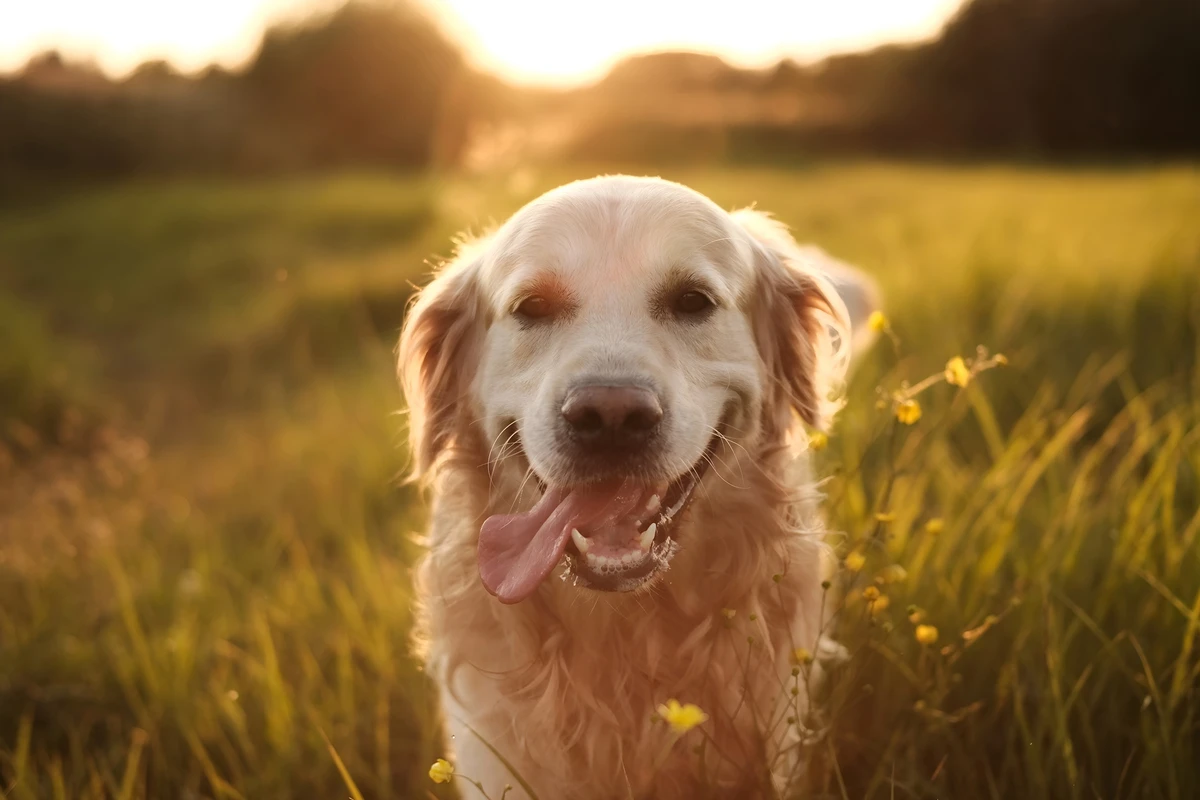
Small
Dachshund, Shih Tzu, Miniature Poodle
Roughly 12–15 years; senior around 10.
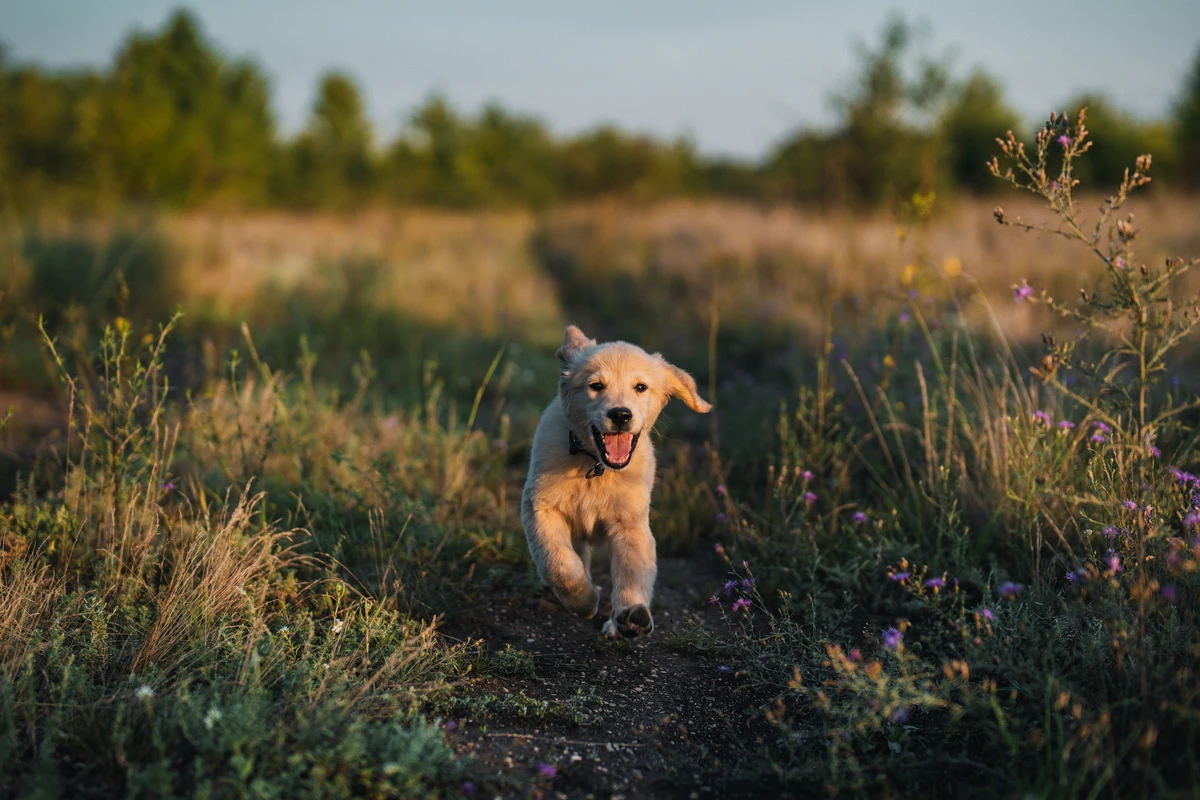
Medium
Beagle, Border Collie, Cocker Spaniel
Roughly 10–13 years; senior around 8–9.

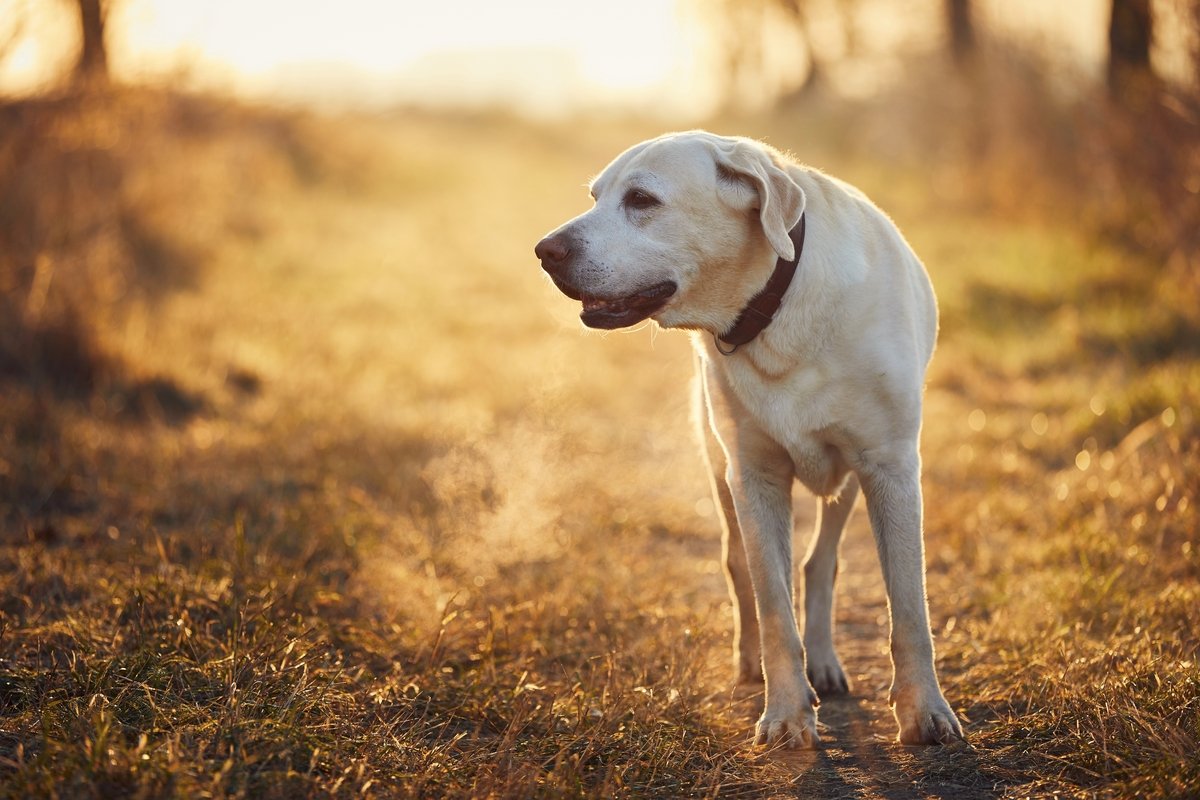
Large
Labrador Retriever, Golden Retriever, German Shepherd
Roughly 10–12 years; senior around 7–8.
Giant
Great Dane, Mastiff, Saint Bernard
Often 7–10 years; seniors as early as 5–6.
The differences are big. So size does most of the work in an honest estimate. That’s the reason the tool asks you to match a mixed-breed dog to the closest breed by size.
Dog Age by Breed
Even inside the same size group, breeds age a bit differently. Genetics, build, and breed-specific health issues all play a part. A Beagle and a Bulldog are both mid-sized dogs. Their lifespans and common health problems still don’t line up neatly. That’s why picking the right breed matters. It fine-tunes the estimate past size alone. And the breed name shows up in your result, so you always know what the number was based on.
We’re also building breed-by-breed guides for people who want more detail. They’ll answer the questions owners actually type in, like “how old is a 7-year-old German Shepherd in human years.” As those pages go live we’ll link them here so you can dig into your own dog’s breed.
- Life Stages
Dog Life Stages Explained
Your result comes with a life stage, because age is most useful when it tells you how to care for your dog right now. The calculator keeps it to three clear stages.
Puppy
This is the fast-growth stretch, roughly the first year. It runs longer for large and giant breeds. It's the time for the vaccination series, early socializing, house and leash training, and a proper puppy food that fuels all that growth. Nail these early steps and you set your dog up for a healthy life.
Adult
This covers the young-adult and prime years. It's the long, steady middle of your dog's life. Now the focus is upkeep. Keep the weight in check. Stay consistent with exercise. Don't skip dental care or the yearly wellness visit. Plenty of owners don't realize how much steady weight control in these years protects the joints and organs down the road.
Senior
This stage includes the older, geriatric years, and it starts sooner for big dogs. Care gets more hands-on. Think more frequent senior screenings, a closer eye on joints and mobility, some diet tweaks, and small changes at home to keep your dog comfy. Spotting this shift early is one of the kindest things you can do for an aging dog.
When Is a Dog Considered a Senior?
There isn’t one senior birthday. It comes down to size. As a rough guide, small and toy dogs hit senior around 10 to 12 years. Medium dogs around 8 to 10. Large and giant breeds get there sooner, sometimes as young as 5 to 6. Your result flags the senior stage on its own, based on breed and size.

Signs Your Dog Is Aging
Look for slow changes, not sudden ones:
- Graying around the muzzle and face
- Slowing down, stiffness, or hesitating at stairs and jumps
- Cloudier eyes or weaker hearing
- More sleep and less stamina
- Shifts in weight, appetite, or bathroom habits
- New anxiety, confusion, or messed-up sleep
Senior Dog Care Checklist
A few simple habits go a long way in the senior years:
- Book vet checkups twice a year instead of once
- Adjust food for lower energy needs and joint support
- Watch the weight and flag any change early
- Ask about age-appropriate bloodwork and screenings
- Keep exercise gentle but regular to hold onto muscle
- Make home comfier with supportive bedding, rugs for grip, and easy access to food and water
- The research
The Science of Canine Aging
The shift away from the times seven rule is backed by real science. Back in 2019 researchers looked at DNA methylation. Those are chemical marks on DNA that change in a predictable way as an animal gets older, often called an “epigenetic clock.” They compared the patterns in Labrador Retrievers and humans. The result was a logarithmic formula. It showed dogs age very fast early on and then slow way down, which matches what vets see every day.
There’s more than epigenetics too. Decades of vet and longevity research keep linking bigger body size to faster aging and shorter life. Studies on aging biology are still digging into why, from growth rate to cellular wear like telomere shortening. Researchers are careful to say the full picture isn’t settled yet. Trusted groups like the American Kennel Club (AKC), the American Veterinary Medical Association (AVMA), and research teams such as the Waltham Petcare Science Institute all publish guidance built on this modern, size-aware view of aging. It’s the same foundation this calculator stands on.
- Practical Value
Why Your Dog’s Real Age Matters
Knowing your dog’s human-equivalent age isn’t just a fun fact. It’s a handy planning tool.
Veterinary care
Age guides when to book checkups, vaccinations, and senior screenings, so you catch problems early while they're easier to treat.
Nutrition
Calorie and nutrient needs shift with each life stage, so the right age helps you feed the right food in the right amount.
Pet health insurance
Premiums and coverage often follow life stage, so knowing where your dog sits can help you decide before costs climb.
Breeding and working dogs
Age matters for reproductive maturity and for planning the right time to retire a working dog.
- See It In Action
Worked Examples
Here’s the size-aware model at work across four breeds. Every number is an estimate.
How old is a 5-year-old Labrador Retriever in human years?
human years
A Labrador lives about 12 to 13 years, so we use an average close to 12.5. The first two years give you 24. The yearly rate after that is about (68 minus 24) ÷ (12.5 minus 2), which is roughly 4.2. Three years past age two comes to 24 + (3 × 4.2), or about 36 to 37 human years. A five-year-old Lab is easing into early middle age. Good time to get serious about weight and dental care.
How old is a 10-year-old Chihuahua in human years?
human years
Toy breeds live a long time, so a Chihuahua averages around 14 years. The rate after age two is about (68 minus 24) ÷ (14 minus 2), roughly 3.7. Eight years past age two works out to 24 + (8 × 3.7), or about 53 human years. Ten on the calendar, but this little one is only a young senior with plenty of good years left.
How old is a 4-year-old Great Dane in human years?
human years
Giant breeds age the fastest. With a lifespan near 7 years, the rate after age two is about (68 minus 24) ÷ (7 minus 2), roughly 8.8. Two years past age two gives 24 + (2 × 8.8), or about 42 human years. At just four calendar years a Great Dane is already well into middle age. That’s why health monitoring should start early with the big breeds.
How old is a 7-year-old Beagle in human years?
Medium
human years
A Beagle averages around 13 to 14 years. Using 13.5, the rate after age two is about (68 minus 24) ÷ (13.5 minus 2), roughly 3.8. Five years past age two comes to 24 + (5 × 3.8), or about 43 human years. A seven-year-old Beagle sits in comfortable middle age. A sensible point to start baseline senior screenings.
- Avoid These
Common Mistakes When Calculating Dog Age
A few errors trip owners up again and again:
Leaning on the times seven rule.
It makes young dogs look less mature than they are and gets older dogs wrong, especially across different sizes.
Ignoring breed size.
Size is the biggest driver of aging. Skip it and your number can be years off.
Treating every mixed breed the same.
A mix ages according to its adult size, so match it to the closest breed by size instead of guessing at an average.
Forgetting the months for puppies.
In the first two years a few months really shift the estimate. That's why an accurate birth month is worth it.
- FAQ
Frequently Asked Questions
Count the first year as about 15 human years and the second as roughly 9 more. That puts a two-year-old dog near 24. After that you add a smaller amount each year based on the dog’s breed and size. Larger, shorter-lived breeds add more per year than small, long-lived ones. The calculator handles all of it once you enter a breed and a birth date.
A dog year calculator is a tool that turns your dog’s real age into the human equivalent. A good one skips the flat multiplier. It accounts for those fast early years and adjusts for breed size, so you get a far more realistic number than the old rule of thumb.
No. It’s a catchy shortcut but it doesn’t match how dogs age. Dogs grow up fast in their first two years, then age at a pace that leans heavily on size. One flat multiplier can’t be right for every dog at every age.
A size-aware dog to human year calculator gives a close, realistic estimate for most dogs. It won’t be exact to the day, since genetics, health, and lifestyle all matter. Still, it’s far more reliable than multiplying by seven, and it reflects the science of non-linear aging.
Depends on size. A 10-year-old small or toy dog is roughly in the mid-50s in human years. A 10-year-old giant breed can be well into its 70s or older, and often past its normal lifespan. This is exactly why breed and size belong in the math.
Big dogs grow fast early on, and that quick growth seems to speed up aging and bring illness on sooner. Small dogs grow more slowly, mature gently, and tend to live longer. The exact biology is still being studied, but the link between size and lifespan is one of the most consistent findings in dog aging.
Small and toy dogs usually reach senior around 10 to 12 years. Medium dogs around 8 to 10. Large and giant breeds sooner, sometimes by 5 to 6. Your result points out the senior stage for you based on breed and size.
Yes. After the first two years, size is the biggest factor. Two dogs that are the same age on the calendar can have very different human ages if one is a toy breed and the other is a giant. That’s why the calculator is built around breed size.
Definitely. For a mix, just pick the breed that best matches your dog’s adult size. Size drives aging more than anything else, so matching by size gives you a dependable estimate even when you don’t know the full genetic mix.
The oldest reliably verified dog was Bluey, an Australian Cattle Dog who lived 29 years and 5 months, from 1910 to 1939. Bluey holds the Guinness World Record. A Portuguese dog named Bobi was recognized at 31 for a while, but Guinness took that title back in 2024 after the evidence didn’t hold up. Ages like these are rare. Most dogs live within the range that’s normal for their size.
Know Your Dog's Real Age? Now Give Them The Care They Deserve
Got questions about your dog’s health or next steps? We’re happy to help.